231 Hour Certificate Program

231 Hour Certificate Program

Self-Heal School Herbal studies & holistic learning
San Diego, California
Herbal studies · Nutrition · Aromatherapy · Energy healing

231-Hour
Certificate Program

A deeper foundation.
A practice of your own.

Turn your interest in natural healing into a connected course of study. Explore medicinal plants, make herbal preparations, study nutrition and aromatherapy, and develop your energy-healing practice.

Save $460 with advance payment. Prefer to pay as you study? Explore all tuition options.

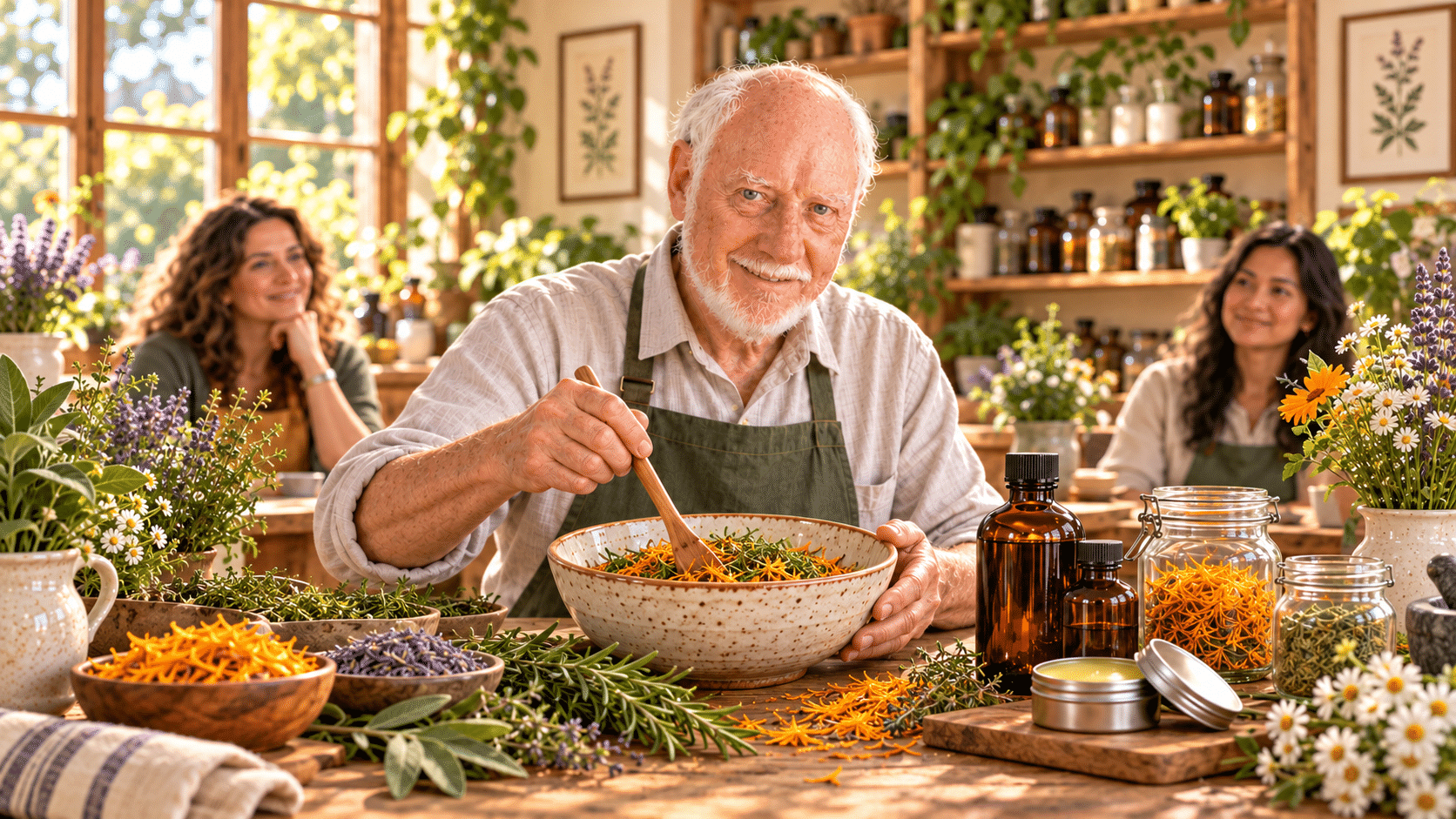
Students preparing herbal remedies in the Self-Heal School apothecary
Learning comes to life in the apothecary, the classroom, and the field.
231 hours of study
& applied learning
13 core courses
15 hours each
5 guided herb walks
2 hours each
More than a collection of classes

Study the whole person.
Start with the plants.

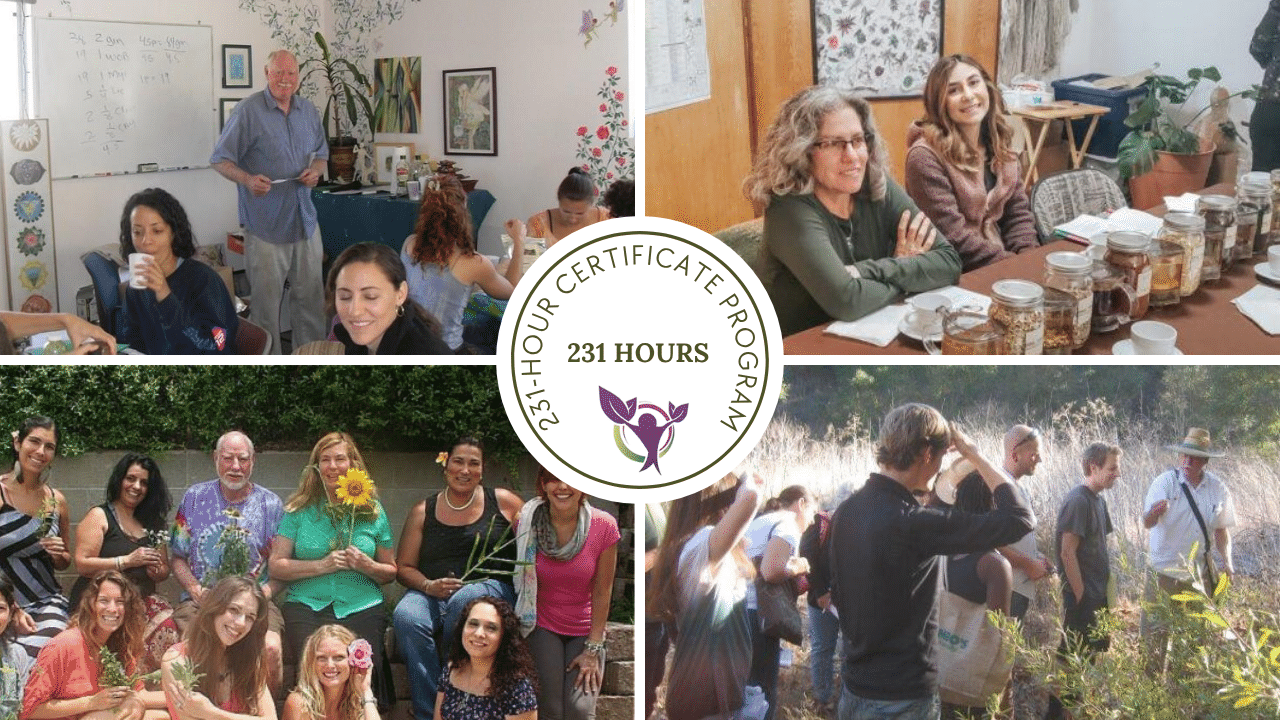
Self-Heal School certificate program collage showing classroom learning, herbal study, students, and an herb-identification walk

You may be ready to move beyond scattered recipes and individual workshops. You want to understand how the pieces fit together: the herb, the preparation, the person, and the everyday choices that support well-being.

Self-Heal’s certificate program brings those threads into one course of study. Classroom learning is joined by research, field identification, medicine-making, and your own formulation work—giving you different ways to explore and apply what you learn.

Complete all 231 hours and the required submissions to earn a Certificate of Completion from Self-Heal School.

Know the plants.

Study herbal foundations, constituents, traditional applications, and the medicinal plants growing around you.

Make the preparations.

Work with teas, extracts, powders, salves, formulas, and the measurements that bring a preparation together.

Broaden your perspective.

Connect your herbal studies with nutrition, essential oils, energy awareness, and the practice of self-care.

Your program at a glance

A clear structure.
Room to grow.

Thirteen courses provide the classroom foundation. Another 36 hours bring your learning into research, preparation, and direct experience with plants.

231 total program hours
231-hour certificate program requirements
Classroom instruction 13 courses × 15 hours 195 hours
Botanical research 10 hours
Plant identification Five guided, two-hour herb walks 10 hours
Medicine-making workshop 6 hours
Herbal formulation 6 hours
Tincture making 4 hours
Certificate program total 231 hours
195 hours of classroom instruction

Explore your curriculum.

Each of the 13 core courses includes 15 hours of instruction. Open a course’s topics for a closer look at what you’ll study.

01 / Herbal studies

6 courses
90 classroom hours

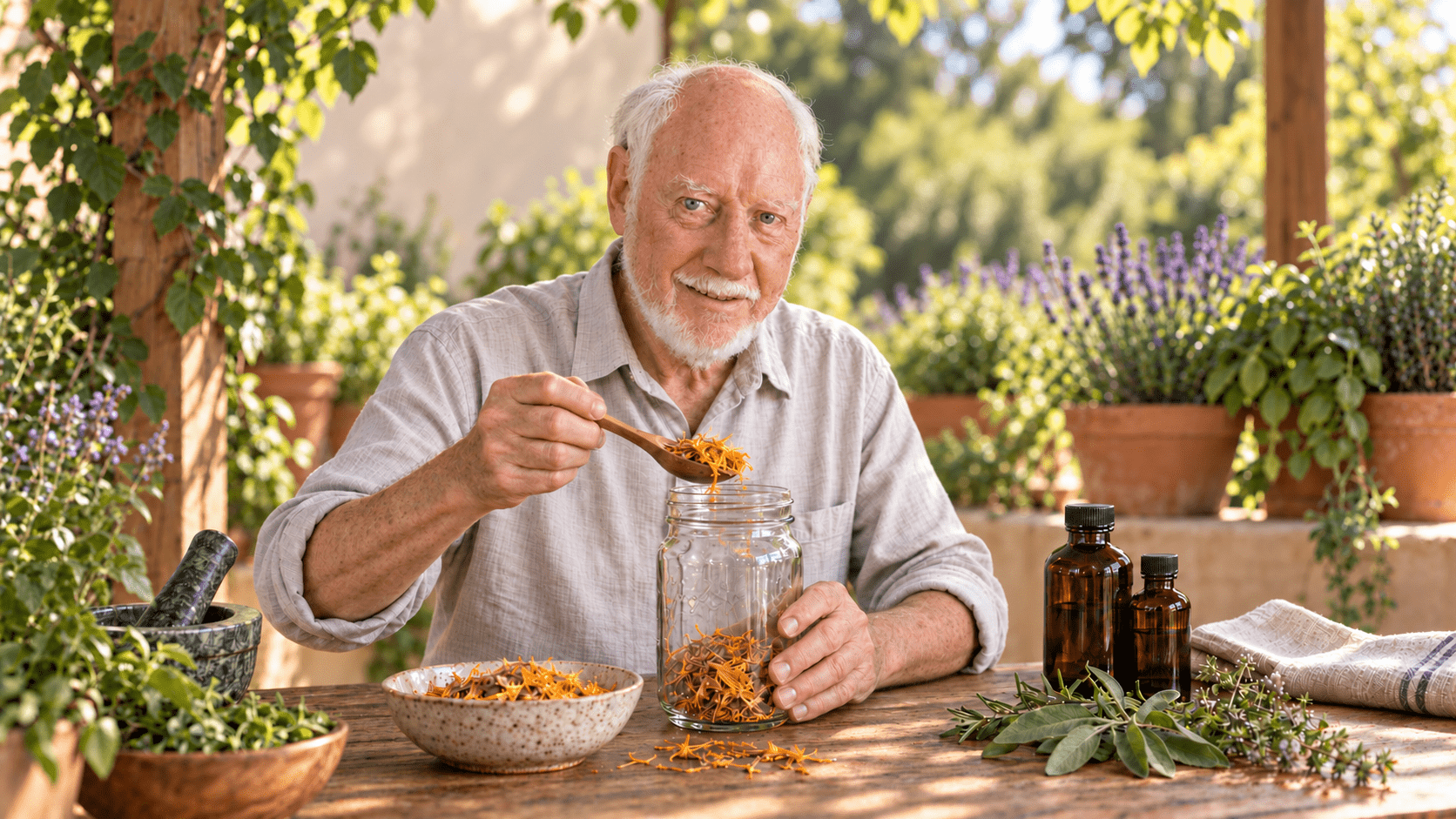
John Finch demonstrating herbal preparation in a sunlit learning space 15 hours
Course 01

Herbalism 101

The Foundations of Plant Medicine

Begin connecting the plant, the preparation, and the purpose. Learn the foundations of Western herbalism through demonstrations, conversation, and practical examples.

Explore course topics
  • Choose quality herbs, store them thoughtfully, and begin identifying medicinal plants.
  • Explore basic Western herbal theory, working with a single herb, and plants used as food and medicine.
  • Prepare infusions, decoctions, cold-water infusions, and other herbal teas.
  • Understand extracts made with alcohol, vinegar, and glycerin; explore powders and capsules.
  • Learn about infused oils, salves, balms, lotions, and creams, plus poultices, plasters, compresses, soaks, and washes.
  • Find useful herbal references to support your studies beyond class.
View course page
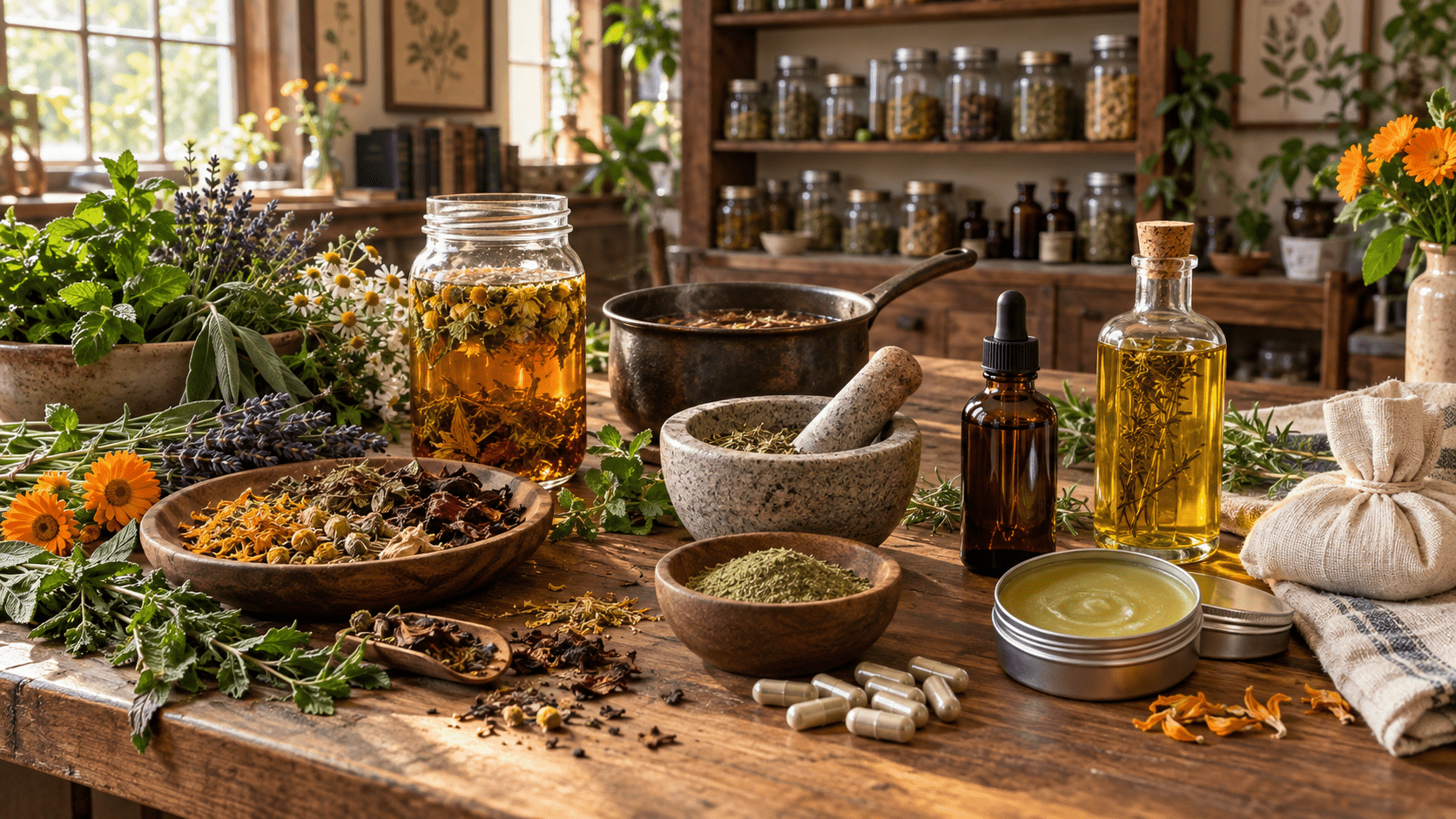
Herbal preparations, dried plants, jars, and a mortar and pestle on a wooden table 15 hours
Course 02

Practical Applications of Herbs

Bring Plant Knowledge Into Daily Life

Explore the many ways herbal knowledge can become part of everyday care, from traditional preparations to the choices behind a balanced formula.

Explore course topics
  • Consider herbal medicine in a global context and explore traditional herbal first-aid practices.
  • Combine herbs in proportional parts and begin thinking through the role of each ingredient.
  • Explore flower essences and the traditional practice of dowsing.
  • Discover herbal cosmetics and traditional approaches to rejuvenation.
Herbal tincture bottles, glass jars, and dried medicinal plants 15 hours
Course 03

Therapeutic Applications of Herbs

Understand the Actions Behind the Herbs

Look more closely at plant constituents and traditional herbal actions, building a vocabulary for understanding how herbs are selected and combined.

Explore course topics
  • Study alkaloids, glycosides, saponins, tannins, bitters, and essential oils.
  • Explore traditional stimulating, calming, tonifying, and cleansing approaches.
  • Examine diuretic and diaphoretic actions, alongside historical purgative and emetic therapies.
  • Consider the relationship between herbal practice and other holistic modalities.
Illustration of the brain and nervous system 15 hours
Course 04

Body System Therapeutics

Connect the Herb With the Whole System

Bring anatomy, physiology, and herbal study together. Explore how individual body systems function and how traditional herbal approaches relate to them.

Explore course topics
  • Begin with the nervous system: herbal nervines, traditional herbal drinks, and footbaths.
  • Explore respiratory preparations, including steams, teas, powders, and syrups.
  • Continue with the musculoskeletal, liver and kidney, immune, digestive, and circulatory systems.
  • Consider herbal tonics, nutrition, aromatherapy, flower essences, and complementary self-care practices.
John Finch teaching students to make herbal preparations around an apothecary table 15 hours
Course 05

Herbal Alchemy

The Art & Science of Medicine-Making

Expand your range of preparation skills—and understand the choices behind what you make. This is the course formerly called Herbal Preparations.

Explore course topics
  • Choose suitable delivery systems for different herbal formulas.
  • Work with measurements, proportional parts, dilutions, and ratios.
  • Explore percolation, boluses, electuaries, and traditional herbal pills.
  • Follow the making of massage creams, balms, cough syrups, and other liquid preparations.
View course page
A woman resting with a book in a bright, peaceful room 15 hours
Course 06

Herbs for Women’s Health

Herbal Allies Through Life’s Seasons

Explore herbal traditions, food, and self-care in relation to women’s health, with attention to life stages, personal experience, and the mind-body connection.

Explore course topics
  • Discuss PMS, menopause, and the changing needs of the body across life stages.
  • Explore traditional perspectives on pregnancy, breast and heart health, and strong bones.
  • Consider herbal and nutritional approaches discussed in relation to cysts, fibroids, and infections.
  • Reflect on stress, mood, weight-related concerns, sensuality, and traditional aphrodisiacs.

02 / Aromatherapy & nutrition

4 courses
60 classroom hours

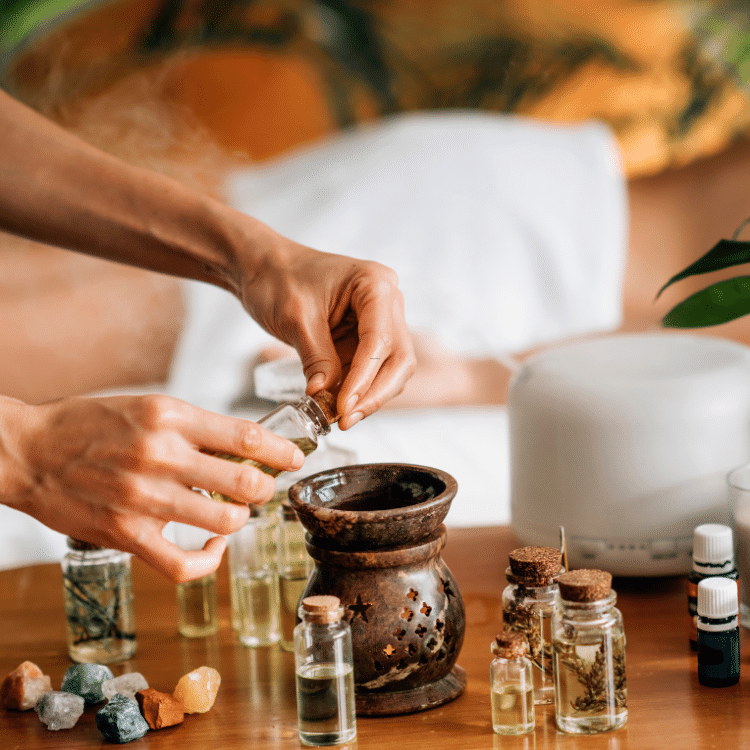
Colorful essential oil bottles beside fresh herbs and lavender 15 hours
Course 07

Aromatherapy I

Discover the Language of Essential Oils

Build a foundation in essential oils: their aromatic notes, properties, and the considerations behind blending them for holistic applications.

Explore course topics
  • Learn the basic principles and vocabulary of aromatherapy.
  • Explore aromatic notes, oil properties, and blending techniques.
  • Take part in exercises with a range of common and less familiar essential oils.

$20 materials fee.

Hands blending an aromatic preparation with a mortar and pestle 15 hours
Course 08

Aromatherapy II

Deepen Your Understanding of the Oils

Move into more advanced aromatherapy study, connecting oil chemistry and plant variations with thoughtful use across body systems.

Explore course topics
  • Explore aromachemistry, chemotypes, and hydrolates (hydrosols).
  • Study applications discussed in relation to muscular, circulatory, digestive, and immune function.
  • Continue with respiratory, reproductive, and nervous-system topics.

$20 materials fee.

Fresh greens, avocado, vegetables, grains, and colorful whole foods 15 hours
Course 09

Nutrition I

Build a More Nourishing Everyday

Explore the foundations of nutrition and the relationship between daily food choices, digestion, and well-being.

Explore course topics
  • Review basic nutrients, hydration, and alternatives to milk and meat.
  • Discuss food combining, traditional acid/alkaline food frameworks, and enzyme nutrition.
  • Explore organic foods, cultured foods, probiotics, digestive health, and nutrient-dense foods.
  • Examine traditional approaches involving wheatgrass, cleansing diets, and fasting.
A nutrition plan beside prepared vegetables and colorful meals 15 hours
Course 10

Nutrition II

Look Deeper Into Food & Function

Study nutrients in greater depth, considering how food composition and dietary patterns relate to individual nutritional needs.

Explore course topics
  • Explore the chemical composition of the body and nutrients in food.
  • Study energy-yielding nutrients and the balance of protein, fat, and carbohydrate.
  • Discuss dietary fats, cholesterol, low-fat dietary approaches, oil quality, and preservation.
  • Examine trans fats, hydrogenation, free radicals, antioxidants, and traditional uses of food as a tonic.

03 / Energy healing

3 courses
45 classroom hours

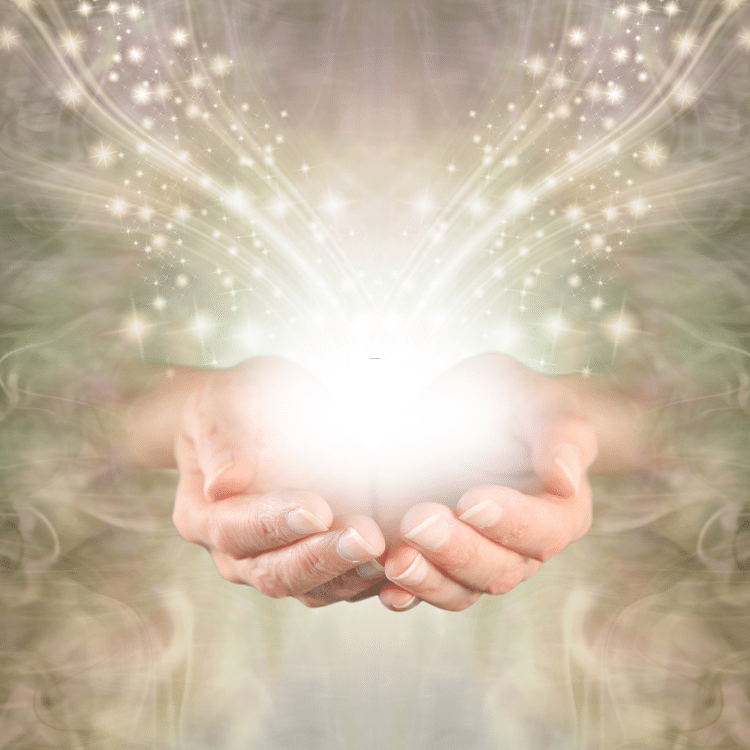
Illustration of cupped hands surrounded by soft light 15 hours
Course 11

Energy Healing I

The Art of Sensing & Working With Energy

Begin exploring energy awareness through guided exercises and partner practice. Watch demonstrations, ask questions, and practice giving and receiving sessions.

Explore course topics
  • Explore the auric field, attention, intention, and the foundations of energy-healing practice.
  • Develop awareness of grounding and personal boundaries while working with another person.
  • Practice with classmates in an interactive setting. No previous energy-work experience is required.
View course page
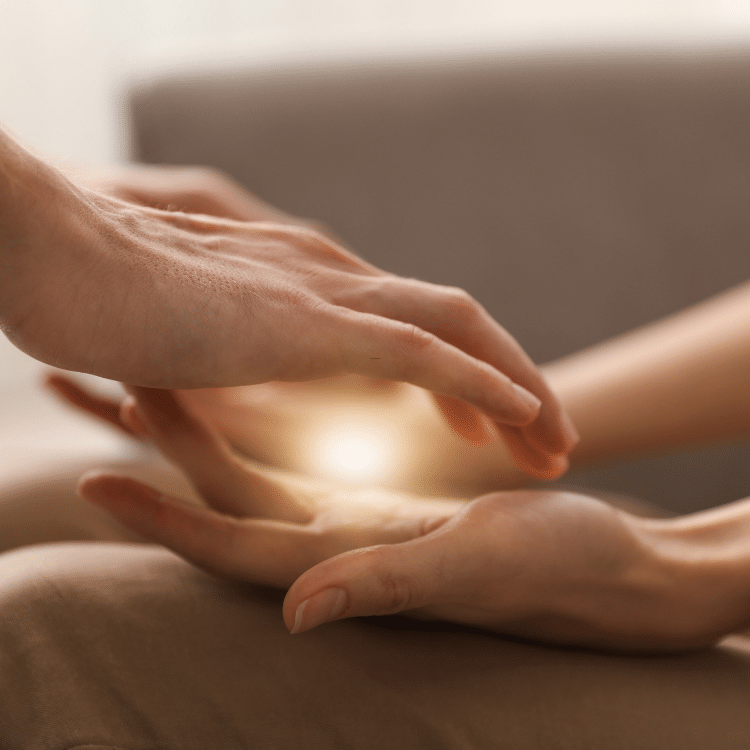
Hands held above a recipient during an energy-healing session 15 hours
Course 12

Energy Healing II

Refine Your Awareness. Deepen Your Practice.

Build on the foundations of Energy Healing I with further practice, intuitive exploration, and techniques introduced in the next stage of study.

Prerequisite: Energy Healing I

Explore course topics
  • Practice additional techniques while giving and receiving energy-healing sessions.
  • Explore intuitive impressions, reading energy, and awareness of auras.
  • Examine spiritual traditions of connecting with guides and interpreting personal impressions.
Crystals, stones, and botanical elements arranged for energy-work study 15 hours
Course 13

Energy Healing III

Explore the Chakras. Enrich Your Practice.

Explore chakra-centered practices and personal development through a varied, experiential course that brings together several complementary traditions.

Prerequisite: Energy Healing I and II

Explore course topics
  • Work with chakra-focused exercises, crystals, and color.
  • Explore meditation, aromatherapy, visualization, and affirmations.
  • Continue developing your personal practice alongside the skills you bring to working with others.

Find your starting point in the current schedule.

Classes & Events
36 hours of applied learning

From understanding
to experience.

Read closely. Meet the plants. Weigh, blend, bottle, and label. These requirements give you a place to bring your classroom learning into practice.

Hands mixing dried herbs during a medicine-making workshop 6 hours · Hands-on workshop

Make your own medicine kit.

Use a scale and herb grinder, calculate proportional parts, and prepare teas, powders, tinctures, and salve. Make, package, and label preparations to take home for continued study.

  • 6 useful tinctures
  • 5 teas / powders
  • Rescue Remedy
  • Herbal salve
John Finch leading students on an outdoor herb-identification walk 10 hours · Field identification

Meet the plants where they grow.

Join five two-hour herb walks to become more familiar with local plants used as food and medicine. Practice noticing their identifying features and discussing their traditional applications in the landscape itself.

Five walks. Two hours each. A different way of seeing the plants around you.
10 hours

Botanical research

Research herbal references and submit a paper that brings together botanical detail, traditional use, and your own observations. Include a bibliography with at least three references.

See the research requirements
  • Botanical names
  • Habitat
  • Description
  • Growth characteristics
  • Parts used
  • Active principles
  • Therapeutic applications
  • History in myth and magic
  • Personal observations
  • Bibliography: at least 3 references
6 hours

Herbal formulation

Create and submit an herbal formula of your own. Describe the action of each herb, making the role of every ingredient clear.

4 hours

Tincture making

Prepare an extract of a chosen herb or formula in your selected menstruum—the extracting liquid. Submit it properly bottled and labeled, with a short explanation of its intended purpose.

Your investment in learning

Choose how you’d like to begin.

The standard program total is $3,060. Pay as you take your courses, or choose an advance-payment option to reduce the total cost.

Pay as you study

Course by course

$3,060

Standard program total.

Pay $200 for each 15-hour course as you take it. The full program also includes the additional required components outlined above.

Find your next course
Save $560

Pay in cash

$2,500

Cash advance-payment program total.

Prefer to pay in cash? Contact Self-Heal School to arrange this option and save $560 compared with the standard total.

Arrange cash payment

Materials: Aromatherapy I and Aromatherapy II each list a $20 materials fee. Ask the school how these fees apply to your selected payment option.

Returning to review a course? Review courses may be taken at half price. Contact the school for registration details.

A starting point, then a path

Begin with your next class.

01

Explore the schedule.

See which courses are coming up on our Classes & Events page. Most six-week courses meet one evening each week.

02

Talk through your plan.

Ask us about course sequencing, prerequisites, and the additional requirements. We can help you understand how your next class fits into the program.

03

Build your foundation.

Complete your courses, join the herb walks and workshop, and develop the research, formulation, and tincture submissions that round out your certificate study.

Attendance: Herbal and nutrition courses offer in-person or live Zoom participation. Energy healing courses meet in person. Check individual course pages for attendance options, materials, and current dates.

Questions before you begin

Make an informed
next step.

Have a question about your situation? We’re happy to talk through the program with you.

What certificate will I receive?

After completing the 231-hour program and its required submissions, you are eligible for a Certificate of Completion from Self-Heal School. This is a school-issued educational certificate, not a medical license.

How long does the program take?

Your timeline depends on course availability, the classes you take, and completion of the applied requirements. Most 15-hour courses meet one evening per week for six weeks. Contact the school to discuss sequencing and a plan for completing the program.

Can I begin with one course?

Yes. You can pay for courses individually as you take them. Herbalism 101 is an introduction to herbal study, and Energy Healing I welcomes people without previous energy-work experience. Ask the school how a starting course fits into your certificate plan.

Can I complete the whole program online?

Herbal and nutrition courses offer live Zoom attendance, while energy healing courses meet in person. The program also includes field identification and a hands-on workshop. Contact the school to discuss attendance for every required component before planning an entirely remote course of study.

Are there prerequisites?

Energy Healing II requires Energy Healing I. Energy Healing III requires Energy Healing I and II. Check current course pages and ask the school about any other sequencing guidance.

Is Herbal Alchemy the same as Herbal Preparations?

Yes. Herbal Alchemy is the current name of the Herbal Preparations course listed in the certificate curriculum. It focuses on preparation methods, delivery systems, dilutions, and proportions.

What is required beyond the 13 courses?

You’ll complete 10 hours of botanical research, 10 hours of plant identification through five herb walks, a six-hour medicine-making workshop, six hours of herbal formulation, and four hours of tincture making. Together with 195 classroom hours, these requirements total 231 hours.

How do I arrange payment or ask about enrollment?

Use any Pay in Full button to go directly to PayPal for the $2,600 advance-payment option. You may also pay course by course toward the $3,060 standard total, or contact the school to arrange the $2,500 cash advance-payment option. For registration questions, use our contact page or call 619-224-1268.

231-Hour Certificate Program

Give your curiosity
a place to grow.

Build a broader understanding of herbal medicine and holistic self-care—one course, one plant, and one preparation at a time.

$2,600
Pay in advance · Save $460
Standard program total: $3,060
Pay in Full · $2,600